DTV Visa - new long term visa in Thailand

Keller Henson Team
Published on May 31, 2025
Updated February 2026
Everything you should know to take advantage of the new long term Destination Thai visa: DTV Visa
The Thai government, and specifically the Immigration Bureau services, introduced various visa options in the past to target retirees, wealthy individuals, students, and remote workers. The latest addition As of July 15, 2024 is a new long term visa called DTV Visa, (Destination Thailand Visa) designed for remote professionals looking to live and work remotely in Thailand legally as “workcation”. The DTV visa also includes individuals participating in approved Thai-based activities “Thai Soft Power”. Let’s see why the 5 years DTV Visa stands out compared to other long-term visas in Thailand.
DTV Visa - Workcation and Thai Soft Power
The DTV Visa is designed for digital nomads, freelancers, and remote workers employed by foreign companies or self-employed in industries that allow remote work. This visa is a pure product of the rise of the post-pandemic remote work culture, and is supposed to attract skilled and wealthy remote workers willing to spend extensive time in Thailand per year, yet less than 180 days for tax residence purposes. The DTV visa is also delivered to individuals engaging in promoted Thai cultural activities, these could include cultural, social, or business-related engagements: Volunteering in registered Thai organizations ; Participating in cultural preservation programs ; Enrolling in specialized business or educational initiatives supported by the Thai government. The cost of the visa is only 10,000 THB or equivalent - check in your country of residence Thai embassy or consulate - List here
DTV Visa - Key Features
Work Legally in Thailand
The visa allows holders to legally work remotely from Thailand without violating Thai laws.
Duration of Stay
The DTV visa offers a long-term stay of up to 5 years, Each entry allows a stay of up to 180 days, renewable by exiting and re-entering or applying for extensions in Thailand.
Income and Financial Requirements
500,000 THB equivalent deposited in a bank account or more financial evidence upon Thai Embassy.
For those applying through Thai-based activities, requirements may include sponsorship or organizational support documentation.
Tax Incentives
DTV visa holders can benefit from Thailand's favorable tax regime, no dual taxation on foreign income.
Streamlined Application Process
The DTV visa is for online submissions, document uploads, and expedited approvals compared to other visa categories.
Family Inclusion
Spouses and children can be included under the DTV visa, making it a family-friendly long-term visa.
DTV Visa: application pre-requirements
Eligibility: Upon embassy, you must show that you have enough liquid assets to support yourself during your extended stay in Thailand. The minimum for this is 500,000 THB, the Thai embassy you apply through may require a higher amount or other set of criteria for how much financial evidence to demonstrate).
Health Insurance: Mandatory health insurance coverage with a minimum policy value of USD 50,000.
Duration: Initially valid for one year, multiple entry, renewable for up to four years.
Each embassy may charge different DTV visa fees, demand to see more than 500,000 THB in your accounts, or require more/different evidence of finances or employment. Call ahead to confirm your local embassy’s requirements.
Another option is to apply online through the Thai e-Visa portal. Your application will still go through your local embassy, so you must also do this from your country of residence and be aware of the embassy’s unique requirements.
Who Should Choose the DTV visa?
The Destination Thailand Visa is ideal for individuals who:
Cannot afford the Elite Visa: DTV is designed to be more accessible providing you can show evidence of funds, and the renewal or extension fees of the visa are regular (1,900 thb only) this is therefore a cost saving option compared to the high prices of the long term visa Privileges Elite that is at 900,000 thb for 5 years.
Are willing to stay without luxury perks: The DTV offers essential residency benefits without the high-end services included in the Elite Visa (chauffeurs, Airport fast track services, etc)
Are Interested in Real Estate Investment: If you’re keen on purchasing a property in Thailand, the DTV allows you to stay extensively in your property visa worry free.
DTV Visa and other Long-Term Visas
1. Retirement Visa (O-A and O-X Visas)
The Retirement Visa is popular among individuals aged 50 and above looking to spend their golden years in Thailand. Key features include:
Requirements: Proof of substantial financial means (e.g., THB 800,000 in a Thai bank account or equivalent monthly income).
Restrictions: No work is allowed on this visa.
Duration: Renewable annually
The Retirement Visa is limited to older applicants, while the DTV Visa caters to working professionals of any age. The DTV Visa allows legal remote work, which is prohibited under the Retirement Visa.
2. Thailand Elite Visa
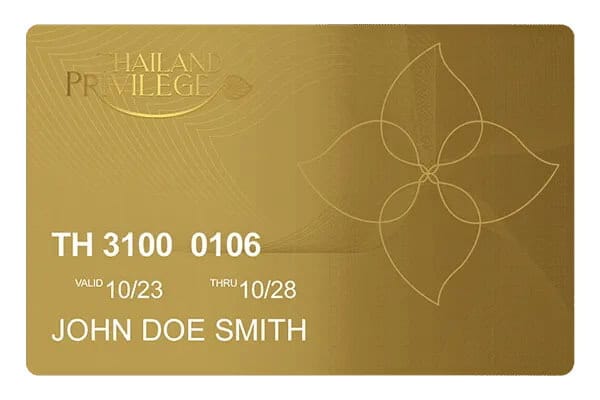
The Thai Elite Visa is a long-term residence visa aimed at high-net-worth expats seeking exclusivity. It comes with premium perks, including VIP airport services, concierge services, access to exclusive events.
Requirements: Membership fees ranging from THB 900,000 , depending on the duration.
Duration: from 5 to 20 years.
Perks: Concierge services, fast-tracked immigration procedures, and access to luxury facilities.
The Elite Visa allows for a 5 years visa without the 180 days limit but it’s not a work visa and does not permit any form of employment or remote work unlike the DTV Visa which is also more affordable.
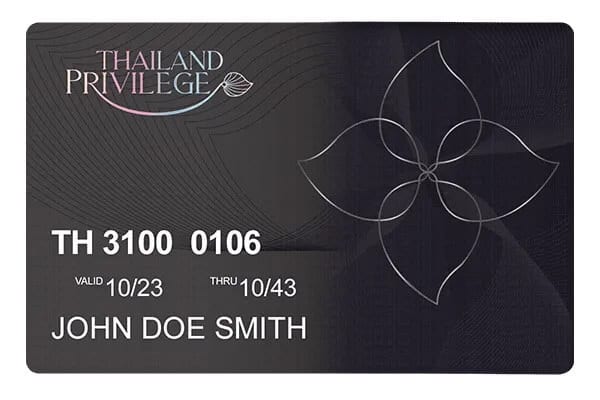
THAILAND ELITE VISA PRIVILEGES
 |  |
 |  |
Comparison of the DTV (Destination Thailand Visa) and Thailand Elite Visa
Feature | Destination Thailand Visa (DTV) | Thailand Elite Visa |
Eligibility | Open to investors, retirees, professionals | Primarily aimed at affluent foreigners and investors |
Visa Duration | 1, 5, or 10 years (renewable) | 5, 10, or 20 years depending on membership level |
Investment Requirement | Real estate investment options available | No real estate investment required |
Initial Cost | Lower entry fee compared to the Elite Visa | Starts at 900,000 THB |
Healthcare Access | Public healthcare access with add-on options for private care | Comprehensive private healthcare access with discounts |
Privileges and VIP Services | Limited VIP services, mostly focused on residency and investment | Extensive VIP services, including airport lounges and spas |
Renewal Options | Renewable after each term with consistent investment | Automatically renewable within membership duration |
Social Benefits | Basic privileges, no specific networking opportunities | Networking events and exclusive community access |
Application | Simplified application through investment or profession-based criteria | Simple, direct application process through Thailand Privilege Card Company |
The Destination Thailand Visa and Thailand Elite Visa offer different benefits depending on individual priorities. The DTV visa is a more practical residency pathway while the Thailand Elite Visa aims at a luxury experience and long-term stability without the possibility of working at all. If your primary goal is to establish a property base and live in Thailand comfortably, the DTV might be the more practical choice. However, if you value high-end services, social benefits, and a seamless, long-term residency experience, the Thailand Elite Visa is the ideal fit.
3. SMART Visa
The SMART Visa is aimed at investors, skilled professionals, executives, and startup entrepreneurs in targeted industries, such as technology, healthcare, and renewable energy.
Requirements: Qualification as an expert or investor in specific industries, or proof of employment with a BOI-promoted company.
Duration: Up to four years.
Perks: No work permit required, extended family benefits, and streamlined reporting requirements.
The SMART Visa is industry-specific and requires employment or contribution to Thailand’s targeted sectors, while the DTV Visa is open to any remote professional, regardless of industry.
4. Business Visa (Non-Immigrant B Visa)
The Business Visa is the traditional option for foreigners seeking to work in Thailand for a local employer or establish a business.
Requirements: Proof of employment or company registration, plus sponsorship from a Thai entity.
Duration: Typically issued for 90 days initially, renewable annually with a valid work permit.
Work Permit: Mandatory and requires regular renewal.
The Business Visa process involves work permits, the visa is to obtain overseas and allows for the work permit application process afterwards while staying in Thailand. The DTV Visa removes the need of a local employer and therefore a Work Permit, you're allowed to work remotely.
5. Education Visa (Non-Immigrant ED Visa)
The Education Visa is intended for students enrolled in Thai schools, universities, or language programs.
Requirements: Enrollment confirmation from an accredited institution.
Duration: Renewable annually, depending on course duration.
Restrictions: No work is allowed.
The Education Visa’s primary focus is studying, while the DTV Visa is tailored for remote professionals. Unlike the Education Visa, the DTV Visa permits remote work.
Why the Destination Thailand Visa(DTV Visa) is a Game-Changer?
The DTV Visa is designed for a growing demographic: remote workers and digital nomads who want to enjoy Thailand and work legally while maintaining their careers. :
Flexibility: No need for a local sponsor, unlike the Business Visa.
Work Legality: Overcomes the gray area of digital nomads working under tourist visas.
Tax Benefits: Opportunities to reduce tax liabilities under Thailand’s progressive tax system, no dual taxation.
Ease of Renewal: Straightforward renewal process for long-term stays.
DTV visa Challenges
Despite its advantages, the DTV Visa has certain challenges:
High Income Threshold: The financial requirements may exclude early-career remote workers or freelancers with inconsistent income.
Insurance Costs: Mandatory health insurance could be costly for some applicants.
Initial Implementation: As a new visa category, there might be teething issues in application processing and enforcement.
DTV Visa - last words
The DTV Visa is a forward-thinking initiative that positions Thailand as a hub for digital nomads and remote professionals. By comparing it to other long-term visas, it is evident that the DTV Visa fills a critical gap for those seeking legal, flexible, and long-term residence in Thailand while continuing to work remotely. For professionals earning a stable income and seeking a tropical lifestyle with access to modern amenities, the DTV Visa is an ideal choice. If you’re considering relocating to Thailand under the DTV Visa, ensure you meet the eligibility requirements and prepare your application meticulously to take advantage of this new opportunity.
Contact us for any query about DTV Visa
FAQs: DTV Visa - new long-term visa in Thailand
The Destination Thailand Visa (DTV) is a five-year, multiple-entry visa designed to accommodate digital nomads, remote workers, and freelancers. Each entry permits a stay of up to 180 days. After reaching this limit, you have two options:
Exit and Re-Enter Thailand: Upon leaving and re-entering the country, you are granted a new 180-day stay period. This process can be repeated multiple times throughout the visa's five-year validity, effectively allowing continuous residence in Thailand.
Extend Your Stay: Alternatively, you can apply for a 180-day extension once per year at a Thai immigration office, subject to an extension fee.
It's important to note that while the DTV facilitates extended stays, accumulating more than 180 days in Thailand within a calendar year may classify you as a tax resident, potentially obligating.
You can apply at a Royal Thai Embassy or Consulate in your country of residence or through the official Thailand e-Visa website. But you cannot apply while you are already in Thailand.
You can stay for up to 180 days per entry. This can be extended for another 180 days, allowing for a maximum stay of 360 days per visit. So in effect, you can stay in Thailand for nearly an entire year before having to leave and re-enter. Renewable up to 5 years total.
No, you cannot work for local Thai companies or have Thai clients without a separate work permit.
Yes, you can include your spouse and dependent children (under 20 years old) on your DTV Visa. They will need to apply separately and pay additional fees.
If you stay in Thailand for more than 180 days in a calendar year, you're considered a tax resident and may need to pay Thai income tax on foreign income brought into Thailand. Depending on the country's Double Tax Agreement (DTA) with Thailand.
Generally, you would need to leave Thailand and apply for a different visa from abroad. However, it's best to consult with Thai immigration authorities for specific cases.
Yes, you can open a business, but if you'll be working for the company, you'll need a separate business visa and work permit.
At the moment Thai banks reject to open a bank account to a DTV Visa holder as it is considered as a short term visa. Short term visa holders like Tourist Visa or DTV Visa are unable to open a bank account in Thailand at this time.
Some digital banking options may be more accessible to DTV visa holders.
The standard DTV visa fee is 10,000 THB (approximately $300 USD). However, fees can vary significantly depending on the country of application, ranging from 10,000 THB to 50,000 THB.
Yes, there's an extension fee of 1,900 THB if you wish to extend your stay for an additional 180 days beyond the initial 180-day period.
Generally, visa fees are non-refundable, especially when applying through the e-Visa system. It's important to ensure you meet all requirements before applying.